
Kia Rio: Brake System / Brake Line
Components and components location
| Components |

Repair procedures
| Removal |
| 1. |
Disconnect the brake fluid level switch connector (A) and then remove the reservoir cap.
|

| 2. |
Remove the front/rear wheel & tire.
|

| 3. |
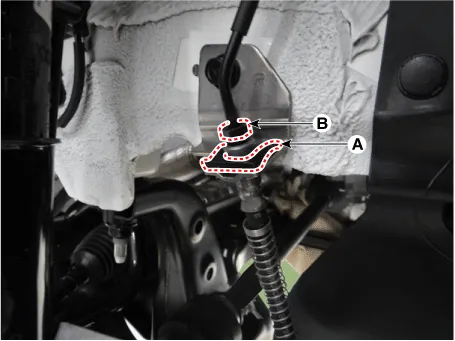
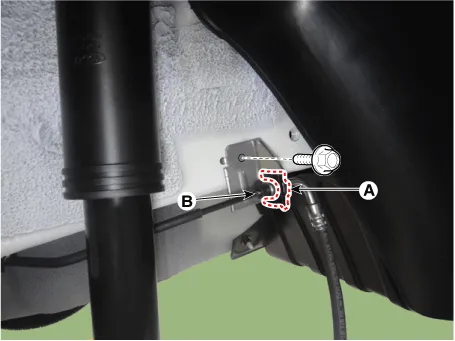
Remove the brake hose clip (A). |
| 4. |
Disconnect the brake tube by loosening the tube flare nut (B).
|
| 5. |
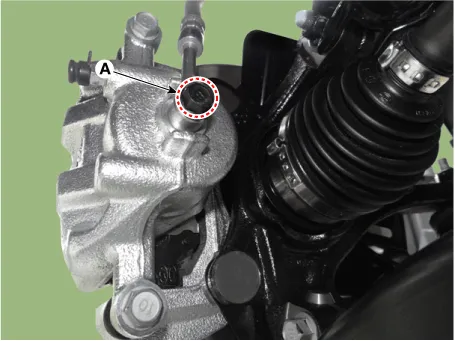
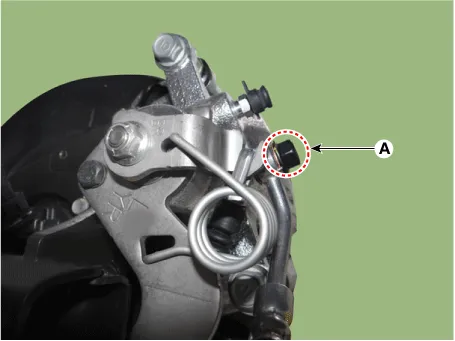
Disconnect the brake hose from the brake caliper by loosening the bolt (A).
|
| Inspection |
| 1. |
Check the brake tubes for cracks, crimps and corrosion. |
| 2. |
Check the brake hoses for cracks, damage and fluid leakage. |
| 3. |
Check the brake tube flare nuts for damage and fluid leakage. |
| 4. |
Check brake hose mounting bracket for crack or deformation. |
| Installation |
| 1. |
Install in the reverse order of removal.
|


| 2. |
After installation, bleed the brake system. (Refer to Brake system - "Brake System") |
| 3. |
Check the spilled brake oil. |
Components and components location Components 1. Brake booster assembly 2. Reservoir 3. Master cylinder Repair procedures Removal 1.
Components and components location Components 1. Brake member assembly 2. Stop lamp switch 3. Pedal assembly Repair procedures Removal 1.
Other information:
Kia Rio 2017-2023 YB Service Manual: Immobilizer System
Schematic diagrams Circuit Diaram Description and operation Description The immobilizer system will disable the vehicle unless the proper ignition key is used, in addition to the currently available anti-theft systems such as car alarms, the immobilizer system aims to drastically reduce the rate of auto theft.
Kia Rio 2017-2023 YB Service Manual: Evaporator Temperature Sensor
Description and operation Description The evaporator temperature sensor will detect the evaporator core temperature and interrupt compressor relay power in order to prevent evaporator freezing by excessive cooling. Repair procedures Inspection 1.
Categories
- Manuals Home
- Kia Rio Owners Manual
- Kia Rio Service Manual
- Maintenance
- Cooling System
- Body Electrical System
- New on site
- Most important about car
